
OLED Display Solutions
Custom OLED Display Solutions
UNI DISPLAY provides custom OLED display modules and integrated OLED display solutions for industrial equipment, consumer electronics, wearable devices, automotive interfaces, medical equipment, smart-home products and portable electronic devices.
- PMOLED & AMOLED
- Touch Integration
- Electronic Integration
- 18+ Years Experience
Why OLED
OLED Display Solutions for Professional Applications
OLED displays are well suited for applications requiring compact design, clear image quality, and flexible system integration. Compared with traditional display technologies, an OLED display offers a set of advantages that make it a strong choice for embedded and professional electronic products.
High Contrast Performance
Self-emissive pixels deliver deep blacks and high contrast, producing clear, well-defined images for demanding visual environments.

Fast Response Characteristics
OLED technology provides fast response times, supporting smooth image transitions and responsive visual performance.
Slim and Compact Design
The thin panel structure supports compact equipment designs and gives greater flexibility where installation space is limited.

Low-Power Display Options
Low-power OLED display options help extend battery life in portable and wearable electronic devices.

Flexible System Integration
OLED modules adapt to different mechanical structures and system requirements, simplifying product integration.
OLED Display Types
OLED Display Categories: PMOLED & AMOLED
OLED display modules can be divided into two main categories according to the driving method: PMOLED (Passive Matrix OLED) and AMOLED (Active Matrix OLED). Different driving structures make the two OLED display technologies suitable for different product designs, display content, resolutions and system requirements.
PMOLED Display – Passive Matrix OLED
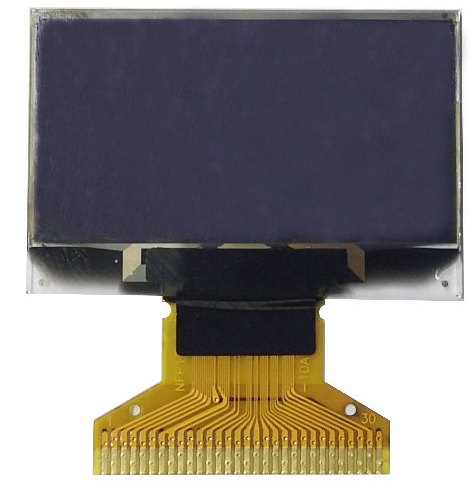
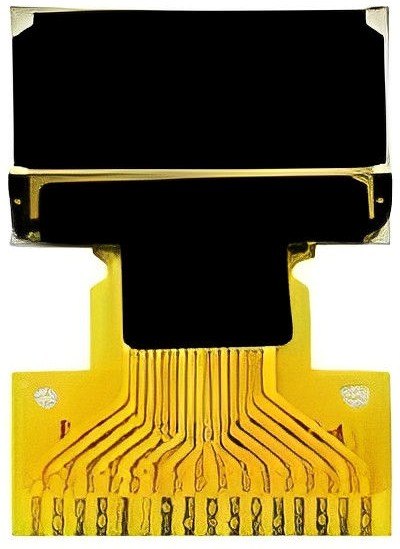
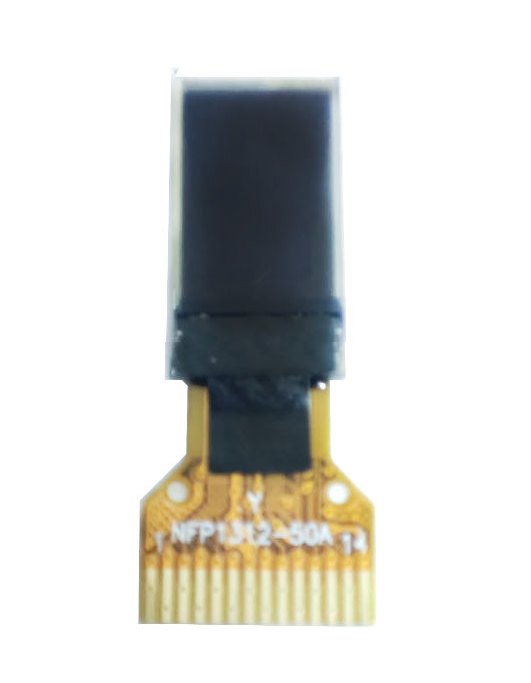
PMOLED displays use a passive matrix driving structure, with rows and columns driven sequentially to control the pixels. This relatively simple architecture makes PMOLED display modules particularly suitable for small OLED display applications and embedded products that mainly present text, icons, symbols and basic graphics.
- Suitable for small and compact display designs
- High contrast OLED display performance
- Suitable for text, icons, symbols and simple graphics
- Suitable for embedded devices with limited installation space
- Available for monochrome OLED display applications
AMOLED Display – Active Matrix OLED
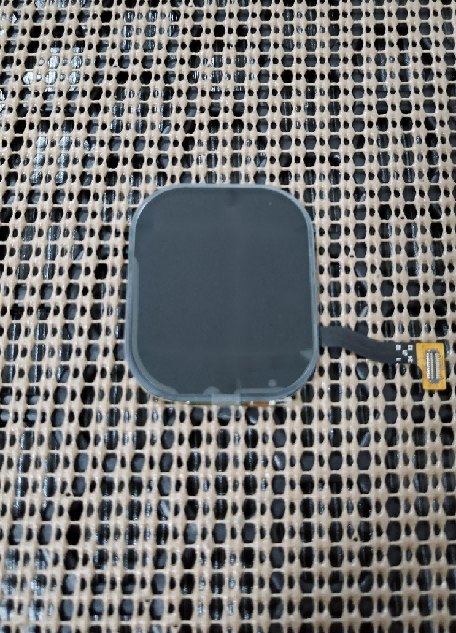
AMOLED displays use an active matrix driving structure in which individual pixels are controlled through active driving circuits. Compared with PMOLED, AMOLED technology is more suitable for OLED display applications requiring higher-resolution graphics, richer visual content, full-color interfaces and dynamic images.
- Suitable for higher-resolution display requirements
- Suitable for detailed graphics and full-color OLED display interfaces
- High contrast and deep black performance
- Fast response characteristics
- Suitable for richer and more dynamic visual interfaces
| Comparison | PMOLED | AMOLED |
|---|---|---|
| Driving Method | Passive Matrix | Active Matrix |
| Typical Display Content | Text, icons, symbols and simple graphics | Detailed graphics, images, full-color and dynamic UI |
| Display Complexity | Relatively simple | Suitable for more complex visual interfaces |
| Typical Product Direction | Small OLED display and compact embedded equipment | Products requiring richer graphical interfaces |
| System Requirements | Relatively simple display requirements | More complex driving and system requirements |
PMOLED and AMOLED are designed for different display and system requirements. The selection should be based on the actual product rather than simply considering one OLED technology better than the other.
Standard OLED Modules
OLED Standard Product Lineup
Beyond custom OLED display development, UNI DISPLAY supplies standard PMOLED and AMOLED modules covering sizes from 0.32 inch to 6.46 inch, with monochrome and full-color options for rapid integration into your product.
PMOLED Standard Modules
| Size | Resolution | Outline Size (mm) | Colors | Interface | Brightness (Min.) |
|---|---|---|---|---|---|
| 0.42" | 72×40 | 12×11×1.25 | White | 4-wire SPI / I²C | 120 cd/m² |
| 0.49" | 64×32 | 14.5×11.6×1.2 | White / Blue | 4-wire SPI / I²C | 180 cd/m² |
| 0.96" | 128×64 | 26.70×19.26×1.45 | White / Blue / Y&B | Parallel / SPI / I²C | 150 cd/m² |
| 1.30" | 128×64 | 34.5×23×1.4 | White / Blue | Parallel / SPI / I²C | 100 cd/m² |
| 1.54" | 128×64 | 42.04×27.22×1.4 | White | Parallel / SPI / I²C | 100 cd/m² |
| 2.23" | 128×32 | 62×24×2.0 | White / Blue / Yellow | Parallel / SPI / I²C | 100 cd/m² |
| 2.70" | 128×64 | 73×40.24×2.0 | White / Blue / Yellow | Parallel / SPI / I²C | 90 cd/m² |
| 3.12" | 256×64 | 88×27.8×2.0 | White / Blue / Yellow | Parallel / 4-wire SPI | 80 cd/m² |
Standard PMOLED modules support mainstream COG driver solutions such as SSD1306, SSD1305, SSD1309, SSD1315 and SH1106, with operating temperatures from -40 ℃ to +70 ℃. The full PMOLED range covers 0.32" – 3.12" — contact us for the complete selection guide.
AMOLED Standard Modules
| Size | Shape | Resolution | Interface | Brightness | Outline Size (mm) |
|---|---|---|---|---|---|
| 0.95" | — | 120×240 | SPI / MIPI | 300 nit | 12.8×27.35×0.78 |
| 1.43" | Round | 466×466 | QSPI / MIPI | 450 nit | 39.15×39.23×0.8 |
| 1.5" | Round | 480×480 | QSPI / MIPI | 600 nit | 40.16×40.19 |
| 1.93" | — | 368×448 | QSPI | 600 nit | 32.67×41.06 |
| 2.4" | — | 450×600 | 4SPI / QSPI / MIPI | 850 nit | 38.68×51.56×0.5 |
| 3.54" | — | 604×1024 | MIPI | 800 nit | 47.56×80.11×0.81 |
| 3.92" | — | 1080×1240 | MIPI | 500 nit | 67.25×79.87×0.70 |
| 4.39" | — | 568×1210 | MIPI | 600 nit | 49.13×103.55×0.5 |
| 6.01" | — | 1080×2160 | MIPI | 500 nit | 70.07×142.30×1.08 |
| 6.46" | — | 1080×2340 | MIPI | 600 nit | 70.37×152.98×0.59 |
Standard AMOLED modules use ONCELL technology with COG / COF packaging, available in round and rectangular cuts for smart wearables, handheld terminals and HMI panels. Additional sizes (2.06", 2.08", 5.48" and more) and touch-integrated versions are available on request.
Custom Development
Custom OLED Display Development
Different equipment requires different display solutions. UNI DISPLAY supports customized OLED display development based on customer product and application requirements, evaluating the appropriate display solution from the final equipment design rather than relying solely on a standard display component.
OLED Display Specification Evaluation
OLED display solutions are evaluated across the full set of product parameters:
- Display size
- Display format
- Resolution requirements
- Interface compatibility
- Mechanical requirements
- Application environment
OLED Module Integration
UNI DISPLAY supports OLED display module integration for OEM applications. Integrated solutions can include:
- OLED display module
- Electronic components
- Connection solutions
- Control interfaces
- Mechanical integration
OLED Interface & System Integration
Interface compatibility is an important consideration when integrating OLED displays into embedded systems. UNI DISPLAY provides engineering evaluation and integration support for:
- Interface matching
- Controller compatibility
- Electronic system integration
- Display system coordination
Integrated Solutions
OLED Display Integration Solution
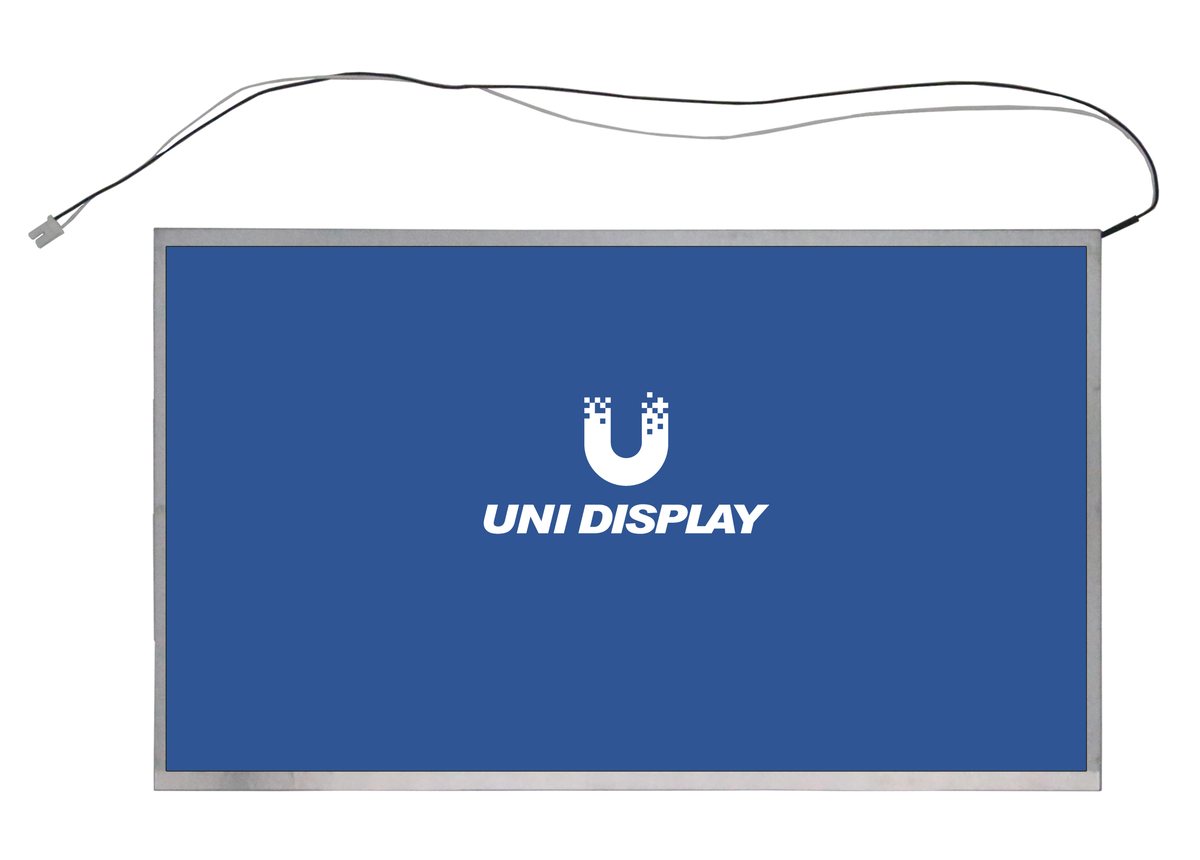
UNI DISPLAY provides more than individual display components. Our integrated display solutions combine OLED and TFT LCD technologies with touch panels, cables, driver boards, and open-frame display solutions to support complete system integration — helping reduce coordination across multiple suppliers and simplifying overall project management.
Controller and driver board assembly for integrated OLED display solutions
OLED Display with Touch & Electronic Integration
For interactive equipment, OLED displays can be integrated with touch panels and electronic components based on the specific application requirements. UNI DISPLAY supports a range of display integration capabilities, including:
- Touch panel solutions
- Display module integration
- Controller board solutions
- Interface board integration
- Mechanical integration
Our engineering capabilities include circuit design, software development, PCB layout, and system integration, supporting the development of complete display solutions developed to integrate with the customer’s existing hardware architecture.
Technology Advantages
OLED Display Technology Advantages
OLED technology offers several advantages for compact, embedded, and professional electronic applications where visual quality, space and responsiveness matter.
High Contrast Display Performance
OLED displays use self-emissive technology, delivering high contrast and clear, well-defined images. This makes OLED suitable for applications where visual quality and information readability are important.

Slim and Compact Design
The slim structure of OLED displays makes them well suited for compact equipment designs, providing greater design flexibility for products with limited installation space.
Fast Response Performance
OLED technology offers fast response times, making it suitable for applications requiring smooth image transitions and responsive visual performance.
Applications
OLED Display Applications
OLED displays are well suited for applications where compact integration, high display quality, and design flexibility are important. OLED applications are different from traditional industrial TFT LCD applications and open new possibilities for product design.
Embedded Industrial Equipment
OLED displays can be integrated into industrial instruments, control devices, embedded systems and specialized electronic equipment.
- Industrial instruments
- Control devices
- Embedded systems
- Specialized electronic equipment
Portable Professional Equipment
OLED displays can support compact products that require lightweight design, clear information display and space-efficient integration.
- Lightweight design
- Clear information display
- Space-efficient integration
Medical & Professional Equipment
OLED displays can be considered for professional equipment requiring clear information presentation, compact display integration and customized product design.
- Clear information presentation
- Compact display integration
- Customized product design
Smart Control Interfaces
OLED displays can be integrated into smart control equipment, embedded operation interfaces and interactive electronic systems.
- Smart control equipment
- Embedded operation interfaces
- Interactive electronic systems
Why UNI DISPLAY
Why Choose UNI DISPLAY for OLED Display Solutions?
As an integrated display solution provider, UNI DISPLAY supports OLED projects with comprehensive engineering capabilities — from display module integration to complete system development.
Integrated Display Solution Capability
UNI DISPLAY provides more than OLED display products. We combine display modules, touch solutions, electronic components, and mechanical integration capabilities to support complete display system development.

Display Engineering Experience
UNI DISPLAY has over 18 years of experience in the display industry, supporting TFT LCD modules, touch displays, optical bonding, and integrated display solutions.

OEM Customization Support
UNI DISPLAY supports OEM customers throughout the project lifecycle, from requirement evaluation and product development to production.

Long-Term Supply Support
UNI DISPLAY focuses on quality management, production stability and long-term OEM cooperation.
Get Started
Request an OLED Display Solution
If you are looking for an OLED display solution, provide your project requirements and our engineering team can evaluate and recommend a suitable configuration.
For a Faster Recommendation, Please Provide
The more context you share, the faster our engineering team can propose the right starting configuration for your equipment.
- Display application
- Required size
- Installation space
- Interface requirement
- Touch requirement
- Mechanical structure
- Existing display model
- Product drawing
- Expected production requirement
Contact UNI DISPLAY Engineering Team
Send your OLED display requirements and we will evaluate the right PMOLED or AMOLED direction for your product.
FAQ
OLED Display FAQs
Common questions about custom OLED display modules, integration and OEM support.
Yes. OLED projects can be evaluated according to application requirements, display structure, interface requirements and system integration needs.
OLED displays are suitable for applications requiring compact design, high contrast performance and flexible integration — such as industrial instruments, portable professional equipment, medical devices and smart control interfaces.
Yes. OLED display projects can be evaluated together with touch integration and complete display system requirements.
Yes. UNI DISPLAY supports OEM projects with engineering evaluation, customized development, system integration, and production support.
Start Your OLED Project
Need a Custom OLED Display for Your Product?
Send your requirements to the UNI DISPLAY engineering team and get a tailored OLED display solution — from PMOLED and AMOLED evaluation to touch and electronic integration.
Engineering evaluation · OEM customization · Long-term supply